
Understanding Shoulder Labrum Injuries: Functions, Types, and Recovery
Shoulder pain can make even simple tasks—like reaching for a seatbelt, lifting groceries, or throwing a ball—feel impossible. While many people attribute upper arm pain to rotator cuff issues, another critical structural component is frequently the culprit: the shoulder labrum.
This guide covers the anatomy of the shoulder labrum, its vital role in arm stability, common types of labral tears, and modern treatment options.
What is the Shoulder Labrum?
The shoulder is a ball-and-socket joint made up of the humerus (upper arm bone) and the glenoid (a shallow socket on the shoulder blade). Because the socket is naturally shallow—often compared to a golf ball resting on a golf tee—it requires extra support to stay centered.
That support comes from the glenoid labrum: a ring of dense, rubbery fibrocartilage attached to the rim of the socket.
Key Functions of the Shoulder Labrum
Deepens the Socket: Increases the depth of the glenoid socket, giving the ball of the upper arm bone a secure fit.
Joint Stability: Acts as a mechanical barrier that keeps the upper arm from slipping out of the socket during movement.
Creates a Suction Seal: Maintains negative fluid pressure within the joint to keep synovial fluid contained and lubricated.
Anchors Key Tendons: Serves as the primary attachment point for crucial stabilizing ligaments and the long head of the biceps tendon.
Common Types of Shoulder Labrum Tears
Labral damage ranges from minor fraying due to wear and tear to full-thickness tears caused by trauma. The type of tear depends on where the cartilage ring is damaged.
1. SLAP Tears (Superior Labrum Anterior to Posterior)
A SLAP tear occurs at the top (superior) portion of the labrum, where the long head of the biceps tendon attaches.
Common Causes: Overuse from repetitive overhead movements (baseball pitching, tennis serves, swimming, weightlifting) or sudden acute traction (e.g., catching a heavy falling object).
2. Bankart Tears
A Bankart tear affects the lower (inferior) portion of the labrum.
Common Causes: Almost always caused by a shoulder dislocation, where the ball pops out of the socket toward the front (anterior dislocation), tearing the lower cartilage rim away.
3. Posterior Labral Tears
Less common than anterior or SLAP tears, posterior tears occur along the back edge of the shoulder socket.
Common Causes: Heavy pushing movements, such as bench pressing, football blocking, or direct trauma from a fall onto an outstretched hand.
Symptoms of a Shoulder Labrum Tear
Because the shoulder relies heavily on the labrum for mechanical smooth movement, symptoms often include both pain and functional instability:
Deep, Aching Pain: Hard-to-pinpoint pain deep inside the shoulder joint, often worsening with overhead activity or reaching behind your back.
Mechanical Popping or Catching: A distinct popping, locking, or grinding sensation when moving the arm in certain directions.
Joint Instability: A persistent feeling that the shoulder is loose, sliding, or "slipping" out of place.
Decreased Strength & Range of Motion: Weakness in the shoulder, often accompanied by a loss of power when lifting or throwing.
How Are Shoulder Labrum Injuries Diagnosed?
Evaluating a labrum tear requires a multi-step clinical approach:
Physical Examination: A specialist performs specific physical tests (such as the O'Brien test or Crank test) to stress the labrum and reproduce symptoms.
X-Rays: While X-rays cannot show soft tissue like the labrum, they help rule out bone fractures, bone spurs, or shoulder arthritis.
Magnetic Resonance Arthrogram (MRA): A standard MRI can miss subtle labral tears. An MRA involves injecting a contrast dye into the joint before scanning, making cartilage tears clearly visible.
Treatment Options: From Conservative Care to Surgery
Treatment depends on the severity of the tear, your activity level, and whether the shoulder feels unstable.
Non-Surgical Treatment
Most clinicians start with conservative management, especially for partial tears or non-athletes:
Rest & Modification: Temporarily eliminating overhead lifting, throwing, or heavy pushing.
Targeted Physical Therapy: Exercises designed to strengthen the rotator cuff and scapular stabilizing muscles, which compensate for the torn cartilage and re-stabilize the ball in the socket.
Anti-Inflammatory Care: NSAIDs or targeted corticosteroid injections to reduce deep joint inflammation and facilitate physical therapy.
Surgical Interventions
If symptoms persist despite physical therapy, or if the shoulder is repeatedly dislocating, arthroscopic shoulder surgery may be necessary:
Labral Repair: Suture anchors are placed into the socket bone to reattach the torn cartilage rim.
Debridement: Trimming and smoothing frayed edges of the cartilage without reattaching them (often used for simple wear-and-tear).
Biceps Tenodesis: For severe SLAP tears, the surgeon may detach the biceps tendon from the torn labrum and reattach it to the upper arm bone (humerus) to take pressure off the joint.
Restoring Shoulder Health
A shoulder labrum injury can be frustrating, but with early evaluation and a structured recovery plan, the prognosis is excellent. Whether through non-invasive physical therapy or minimally invasive surgery, most patients successfully regain full function and return to pain-free daily living.
If you are experiencing persistent shoulder pain, catching sensations, or joint weakness, reach out to an orthopedic physical therapist or sports medicine specialist to schedule a evaluation.
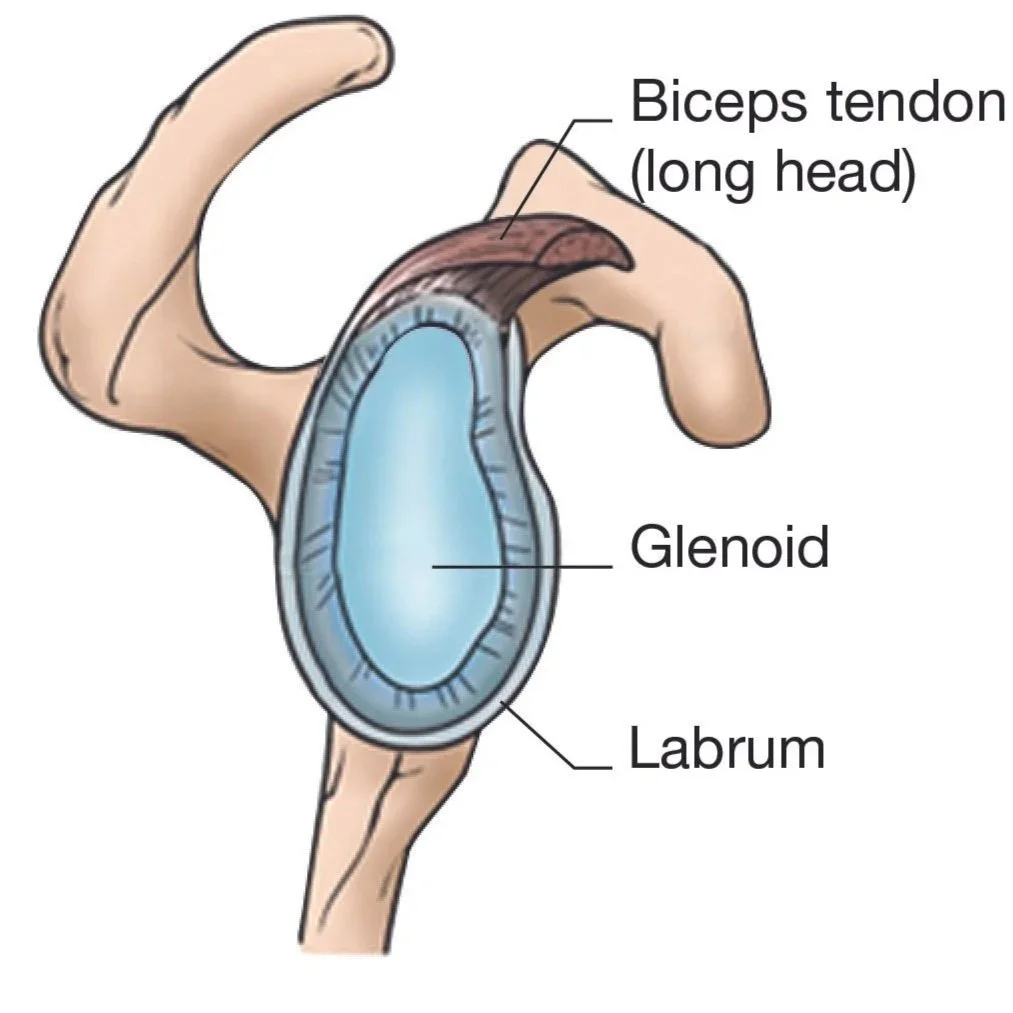
Photo Credit: Orthoinfo