
Physical Therapy in West Chester: A Complete Guide to Athletic Recovery and Performance
One awkward landing, one hard tackle, one throw that felt wrong, and suddenly your season is in question. Maybe you are a high school quarterback with a cranky shoulder, a weekend warrior whose back locks up after every round of golf, or a swimmer who cannot shake a nagging ache. You want answers, and you want to get back to your sport as safely and quickly as possible.
This guide walks you through what physical therapy in West Chester can look like when it is built for athletes. You will see how injuries are evaluated, which treatments make a difference, how testing guides your return to play, and how to train smarter so you stay on the field. At Ignite Physical Therapy, the approach is built around the way athletes actually train, compete, and recover.
What Athletic Physical Therapy Actually Looks Like
Physical therapy for athletes is more than rest, ice, and a handout of exercises. It is a process of finding out why you got hurt, calming the pain, rebuilding the tissue, and training your body to handle the demands of your sport again.
General rehab often stops when your pain goes away. Athletic rehab goes further. Your sport asks you to sprint, cut, throw, swing, jump, and absorb contact, so your plan has to prepare you for those exact moments.
The Core Pieces of a Complete Athletic Plan
A strong plan typically blends several elements:
A detailed evaluation that looks at how you move, not just where it hurts
Hands-on treatment to reduce pain and restore motion
Progressive strengthening that builds capacity in the injured area and the surrounding chain
Sport-specific drills that bridge the gap between the clinic and the field
Objective testing that confirms you are truly ready to compete
Ignite Physical Therapy offers each of these under one roof, including sports physical therapy, strength and conditioning, manual therapy and dry needling, and performance testing. You can explore the full list on the services page.
Why Your Therapist's Athletic Background Matters
Athletes can tell quickly when a provider does not understand the game. Telling a pitcher to simply rest for six weeks or a lineman to avoid contact without a clear plan misses the point entirely. You need someone who understands what is at stake.
The therapists at Ignite Physical Therapy are athletes themselves. They understand the pressure of a short season, the frustration of watching teammates play without you, and the mental weight of wondering if you will feel like yourself again. That experience shapes how care is planned.
What That Means for You
A plan built for athletes. Your goals and workload are different from the average patient, and your care reflects that.
Sport-specific knowledge. Deep experience with football, baseball, golf, and a wide range of athletic injuries informs every plan.
Honest conversations. You will hear what your injury is, why it happened, and what it will take to come back stronger.
Visit the About page to meet the team.
Which Injuries Can Physical Therapy Help You Recover From?
Athletic injuries tend to cluster around the joints that take the most stress. Below are the areas treated most often at the West Chester clinic.
Shoulder and Elbow Injuries for Overhead Athletes
Quarterbacks, pitchers, swimmers, and tennis players ask a great deal of their shoulders and elbows. Repetitive overhead motion can lead to:
Shoulder impingement and rotator cuff pain or tears
Frozen shoulder
Little League elbow and Little League shoulder
Tennis elbow and golfer's elbow
Wrist pain
Treatment typically combines pain relief, restored mobility, and targeted strengthening of the shoulder blade and rotator cuff. Throwing and swinging volume is then built back gradually so the arm is ready for the workload it actually faces.
Hip, Knee, and Lower Leg Injuries
Your lower body is your engine. Football, soccer, lacrosse, and running sports can wear on it quickly. Conditions treated include:
ACL injuries and meniscus injuries
Hamstring strains and groin pain
Ankle sprains
Hip pain, hip impingement (FAI), and labral tears
Runner's knee (patellofemoral pain) and IT band syndrome
Achilles tendinopathy, plantar fasciitis, and shin splints
The goal is not only to settle symptoms. It is to restore strength, balance, and neuromuscular control so the same problem does not return the first time you push hard.
Back, Neck, and Posture Concerns
Low back pain, mid back pain, neck pain, and sciatica can sideline you just as quickly as a joint injury. Postural issues and scoliosis are also addressed. A movement-based approach examines how your hips, trunk, and shoulders share the load, because pain in your back often traces back to limitations elsewhere in the chain.
Concussion Symptoms, Dizziness, and Vertigo
After a head injury, symptoms like dizziness, difficulty focusing, or poor balance can linger well past the initial event. Vestibular and neuro rehab options at Ignite include gaze stabilization training, oculomotor and visual tracking therapy, and vestibular balance training. For BPPV, a common cause of vertigo, canalith repositioning is a recognized treatment approach supported by guidance from the American Physical Therapy Association.
How Performance Testing Reveals What Your Body Needs
Guessing is how athletes get hurt twice. Testing replaces guesswork with data so you and your therapist can make decisions based on facts.
Movement Screens and Force Plate Testing
A movement screen reveals limits in mobility, stability, or motor control that can raise injury risk or hold back performance. Force plate testing measures how you produce and absorb force, which helps compare one leg to the other and track changes over time. This information is especially valuable after a lower body injury, when strength differences between sides can hide behind a pain-free feeling.
Return-to-Sport Testing
Feeling ready and being ready are not the same thing. Research published in the British Journal of Sports Medicine has linked passing return-to-sport criteria with a lower rate of repeat knee injuries after ACL reconstruction. That is why return-to-sport testing at Ignite evaluates strength, power, movement quality, and confidence before clearing an athlete for full competition.
TPI Testing for Golfers
Golf looks low-impact, but the swing places real rotational stress on your back, hips, and shoulders. Titleist Performance Institute (TPI) testing screens how your body moves in relation to the swing, so physical limitations that may cause pain or cost you distance and consistency can be addressed directly.
Preseason Screening
Ignite also offers preseason performance testing and athlete screening. Catching a weak link before the season starts is far easier than managing a strain mid-season. A short assessment in the preseason can help you identify those risks early and address them proactively.
What Treatments Help You Move and Feel Better?
Pain and stiffness can prevent you from training the way you want to. Hands-on care helps open the door so your exercise program can actually do its job.
Manual Therapy and Soft Tissue Work
Manual therapy is skilled, hands-on treatment aimed at improving joint and tissue movement. Depending on your needs, care may include:
Joint mobilization
Myofascial release and soft tissue mobilization
Trigger point therapy
Instrument-assisted soft tissue mobilization (IASTM), including Graston technique and scraping
Cupping
Assisted stretching and massage therapy
Athletic taping and kinesiology taping
These techniques can reduce pain and improve motion in the short term. They work best as a bridge to exercise, not a replacement for it.
Dry Needling Within a Movement-Based Plan
Dry needling uses thin, solid needles placed into tight bands of muscle called trigger points. Studies indexed on PubMed suggest it can help reduce pain and improve range of motion in some musculoskeletal conditions, particularly in the short term.
At Ignite Physical Therapy, dry needling is not a standalone fix. It is integrated with a comprehensive, movement-based rehab approach so that the relief you gain is used immediately to retrain better movement patterns and build strength.
Electrical Stimulation
When appropriate, electrical stimulation (TENS or NMES) can help manage pain or activate muscles that are difficult to engage after injury or surgery.
How Strength and Conditioning Rebuild You Better Than Before
Rehab that ends with pain relief leaves you exposed. Strong tissues and well-trained movement patterns are what protect you when the game speeds up.
The Progression from Rehab to Performance
Your plan typically moves through clear stages:
Calm and restore: reduce pain, recover motion, and begin gentle loading
Build: resistance training and therapeutic exercise to rebuild strength
Control: balance, proprioception, and neuromuscular re-education to sharpen coordination
Power: plyometrics and return-to-sport progressions to develop explosive, game-ready movement
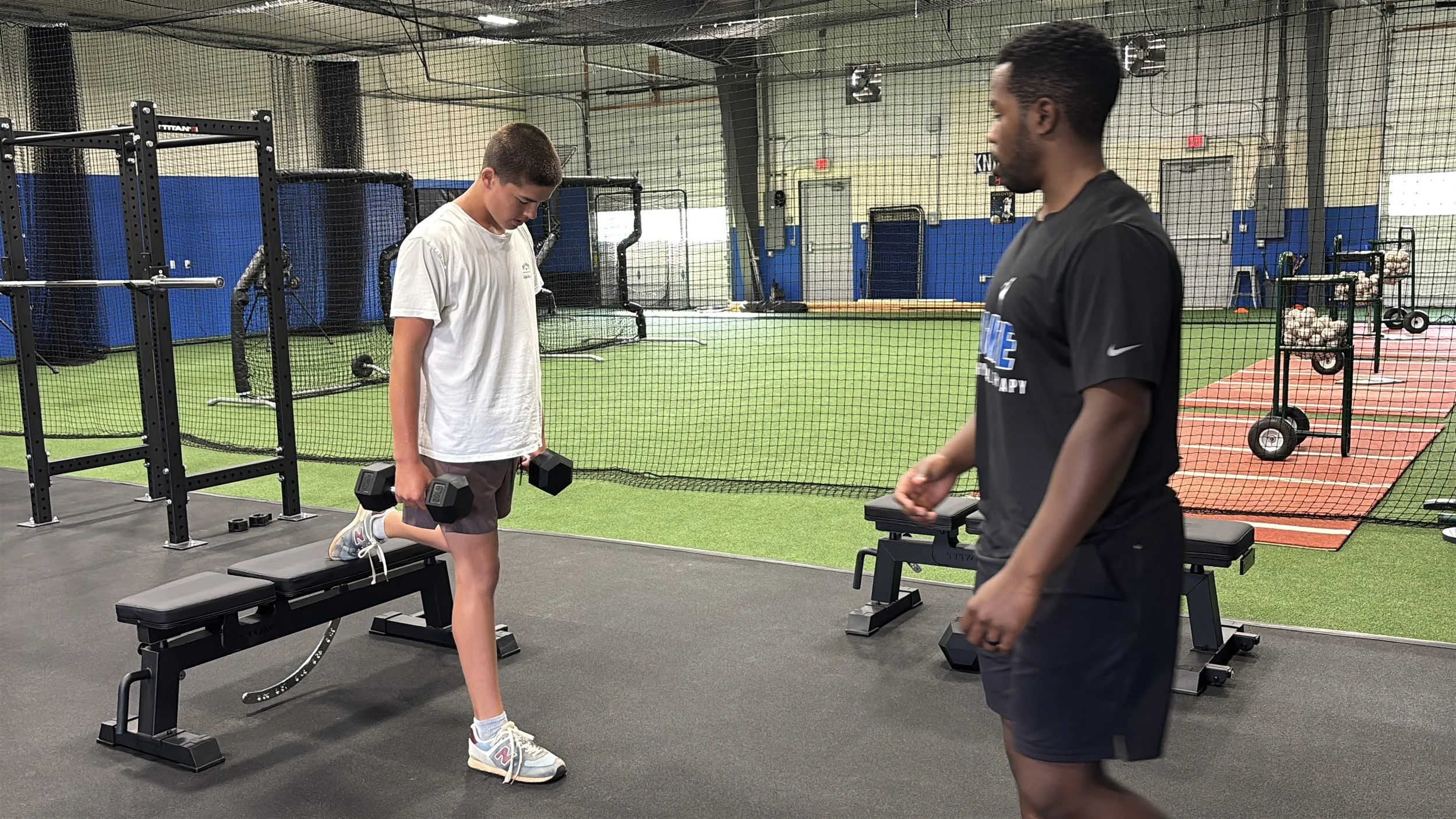
Because strength and conditioning services sit alongside physical therapy at Ignite, you do not have to start over with a new provider when rehab ends. You can keep building in the same environment with people who already know your history.
Training Space That Fits Your Sport
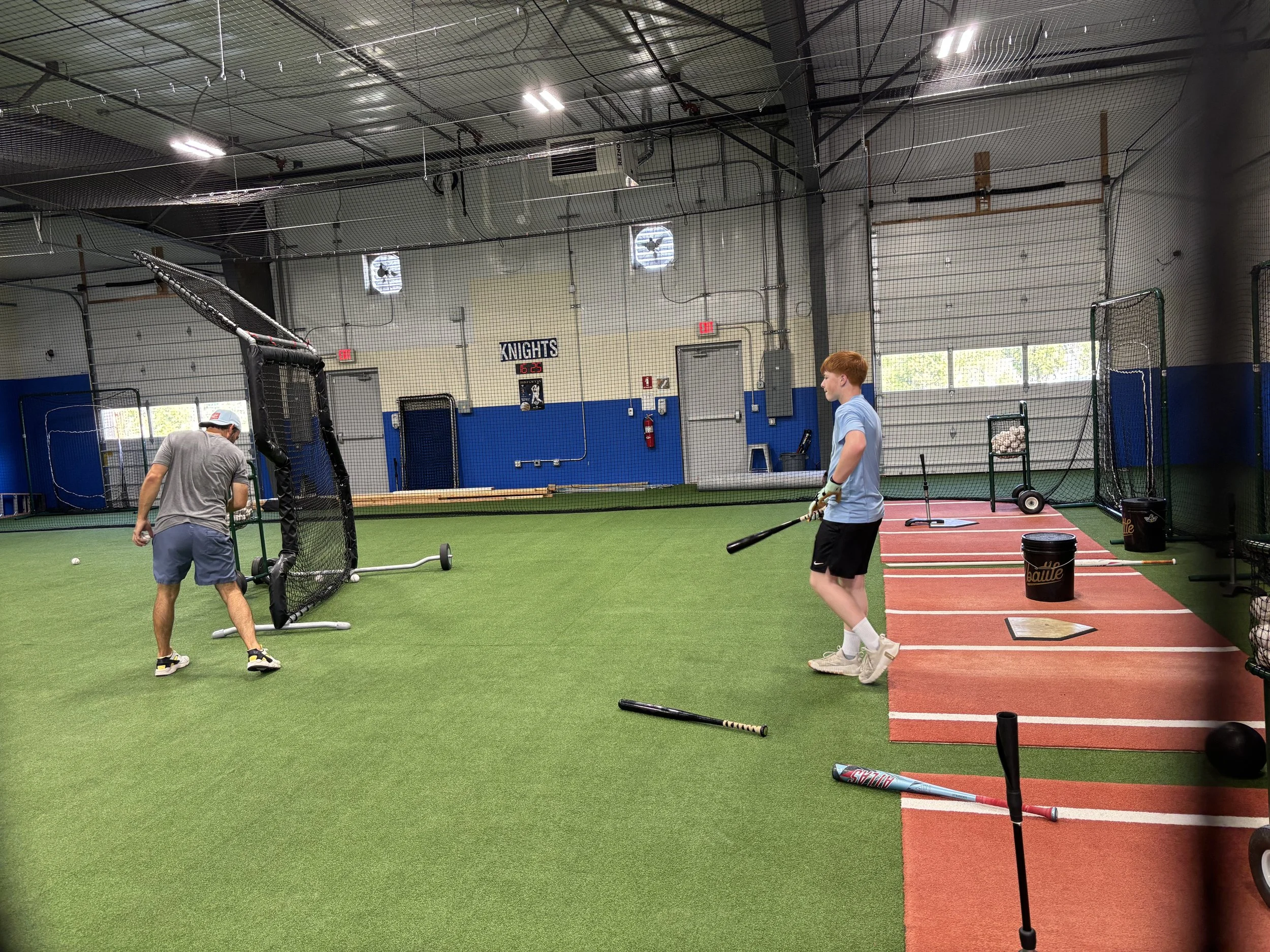
Sport-specific training matters, especially for throwers and hitters. Ignite offers turf and batting cage rentals so you can practice movements that mirror your sport rather than only working on machines. That helps close the gap between being cleared and being truly ready.
Can Prehab and Injury Prevention Keep You Off the Sidelines?
The best injury is the one that never happens. Prehab means addressing risk factors before they become problems, and it is a smart investment at any point in the year, especially before a new season begins.
What Prehab Can Include
A movement screen to flag mobility or stability gaps
Force plate testing to compare strength and power from side to side
Targeted strengthening for common trouble spots like hamstrings, hips, shoulders, and ankles
Mobility work for areas that stay chronically tight
Training load guidance so you build volume at a pace your body can adapt to
Overuse injuries and tendinopathy often develop when training ramps up faster than the body can handle. A short assessment before the season can help you spot those risks early.
What About Young Athletes Who Are Still Growing?
Teen athletes face a unique set of challenges. Bones can grow faster than muscles and tendons can keep up, which may lead to pain at growth areas. Ignite treats growing pains, Osgood-Schlatter disease, Sever's disease, and Little League elbow and shoulder.
The approach is not simply to shut things down. Careful load management, flexibility and strength work, and education for both athletes and parents can help young players keep participating while protecting their long-term development. Youth sports performance and growth support services aim to build sound movement habits early.
Is Physical Therapy Only for Competitive Athletes?
Not at all. The athlete-focused approach at Ignite does not mean only competitors are welcome. If you are an active adult dealing with stiffness, a desk worker who wants better posture, or someone who wants to stay strong and steady as you age, the same principles apply. Support is available for:
Mobility and flexibility improvement
Posture improvement and ergonomics support
Balance and fall prevention
Strength building
Healthy aging
If you want consistent access to training and care beyond a single episode of treatment, ask about membership options designed for people who want ongoing support.
What to Expect at Your First Visit
Your first visit is about understanding you. Expect a conversation about your sport, your injury history, your schedule, and what you want to accomplish. Your therapist will assess how you move, test strength and mobility, and use screening tools where they add value.
You will leave with a clear picture of what is going on, what the plan is, and what you can do right away. Ignite Physical Therapy is a self-pay clinic, which means your care is built around what you actually need rather than what a third party dictates.
Ready to Get Back in the Game?
You do not have to wait until an injury forces you out of your sport. Whether you are rehabbing, preparing for preseason, or simply looking to move better, the right plan can change your season.
Reach out to Ignite Physical Therapy today to schedule your evaluation and take the next step toward your comeback. Visit the home page to get started, or browse more athlete education on the Ignite blog.